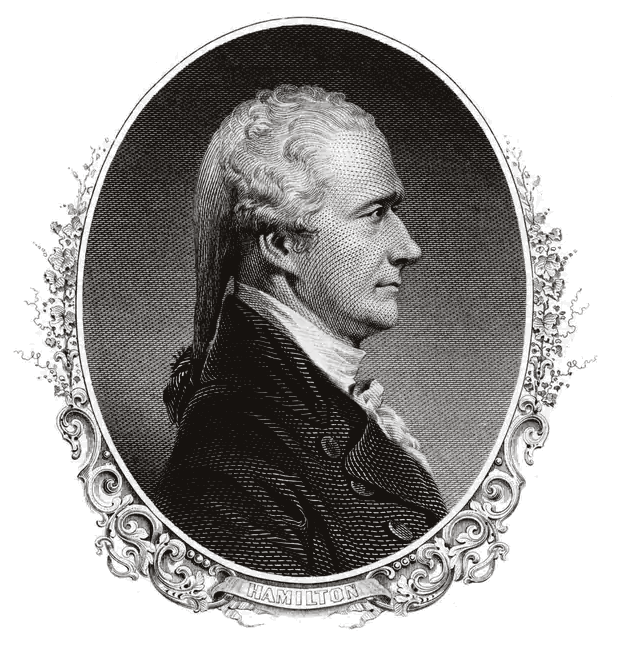
An engraved portrait of Alexander Hamilton, printed by the Bureau of Engraving and Printing
An engraved portrait of Alexander Hamilton. Bureau of Engraving and Printing. Public domain.

Reference

Fed and Money Market Glossary: Rates, Tools and Terms Explained

The Fed Gazette glossary defines 15 Federal Reserve and money market terms, each checked against an official page. For example, the effective federal funds rate was 3.88% on Nov 18, 2026 (Federal Reserve Bank of New York).

Source: Federal Reserve Bank of New York · Published · Updated

Plain-English definitions of the rates, tools and documents behind the Fed's work. Each entry names the official page it was checked against. Where the data folder holds a live series, the entry shows its latest print with the as-of date and source.

Fed glossary: 15 Federal Reserve terms explained

  • Effective federal funds rate (EFFR)

    The effective federal funds rate is a measure of what banks pay for overnight unsecured borrowing from other depository institutions in the federal funds market.

  • Federal funds target range

    The federal funds target range is the span for the overnight federal funds rate that the Federal Open Market Committee sets.

  • Interest on reserve balances (IORB)

    Interest on reserve balances is the interest the Federal Reserve Banks pay on the reserve balances that eligible institutions hold with them.

  • Overnight reverse repo (ON RRP)

    In an overnight reverse repo, the New York Fed's trading desk sells securities to a counterparty and agrees to buy them back the next day.

  • Treasury General Account (TGA)

    The Treasury General Account is the U.S. Treasury's checking account at the Federal Reserve, which acts as the government's bank.

  • System Open Market Account (SOMA)

    The System Open Market Account holds the dollar-denominated assets the Federal Reserve has acquired through open market operations, mainly securities.

  • Beige Book

    The Beige Book is a Federal Reserve report on current economic conditions, formally titled Summary of Commentary on Current Economic Conditions by Federal Reserve District.

  • Federal Open Market Committee (FOMC)

    The Federal Open Market Committee is the Federal Reserve body responsible for open market operations and for setting the stance of monetary policy.

  • Taylor rule

    The Taylor rule is an equation, introduced by the economist John Taylor in a paper published in 1993, that prescribes a value for the federal funds rate.

  • Nominal GDP level targeting (NGDP targeting)

    Nominal GDP level targeting is a proposal that a central bank aim for a path of nominal GDP, the dollar value of all goods and services produced, instead of aiming at an inflation rate.